
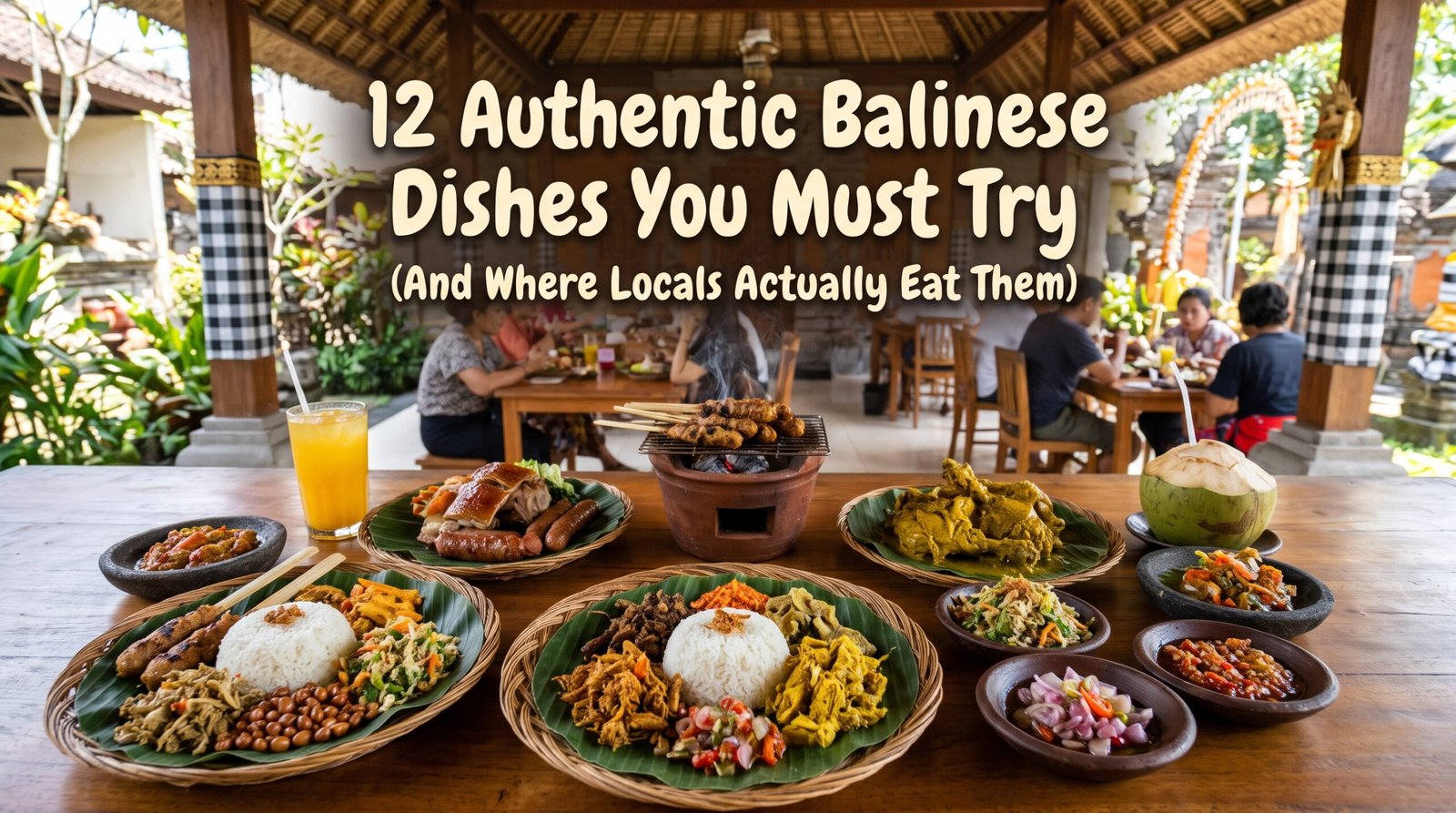
Walk down any main street in Seminyak, Canggu, or Ubud, and you will see hundreds of menus advertising smoothie bowls, wood-fired pizzas, and “Balinese Nasi Goreng.” While those cafes are great for a relaxed brunch, they rarely represent what Balinese families actually eat at home or during temple ceremonies.
True Balinese cuisine is bold, aromatic, and deeply rooted in Basa Genep—a complex traditional spice paste made from galangal, turmeric, ginger, shallots, garlic, candlenuts, chilies, and shrimp paste.
As a local Balinese tour crew at Bali Siki Tours, we spend every day driving guests across the island—and we know exactly where to pull over when lunchtime hits. If you want to skip the watered-down tourist menus and taste the real island, here are 12 authentic Balinese dishes you must try, along with the exact local warungs (family-run eateries) where we eat ourselves.
1. Babi Guling (Balinese Spit-Roasted Suckling Pig)
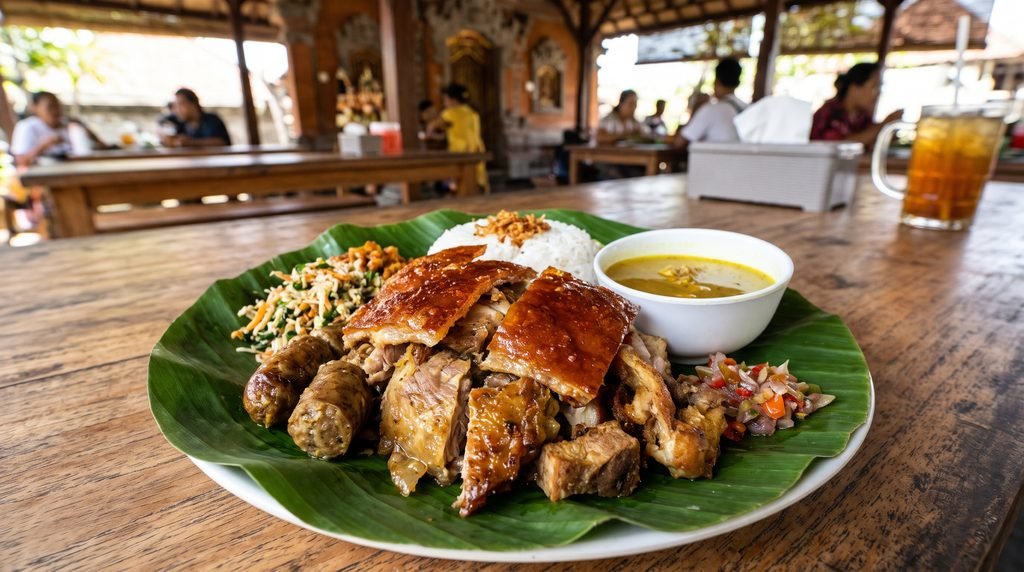
If Bali had an unofficial national dish, it would be Babi Guling. Originally prepared for Hindu temple offerings and major family celebrations, this dish features a whole pig stuffed with Basa Genep spice paste and cassava leaves, rubbed with turmeric for its signature golden skin, and slow-roasted over an open coconut-husk fire for hours.
A proper plate comes with crackling crispy skin, tender meat, pork sausage (urutan), fried pork skin, and spicy lawar over steamed rice.
- Where Locals Actually Eat It: Warung Babi Guling Pak Malen (Seminyak) is famous, but for an uncompromising local experience, head to Warung Babi Guling Karya Rebo near Jimbaran or Babi Guling Slingsing Bu Suci in Tabanan. Arrive before noon—once the pig sells out, the doors close.
2. Ayam Betutu (Slow-Cooked Spiced Chicken)
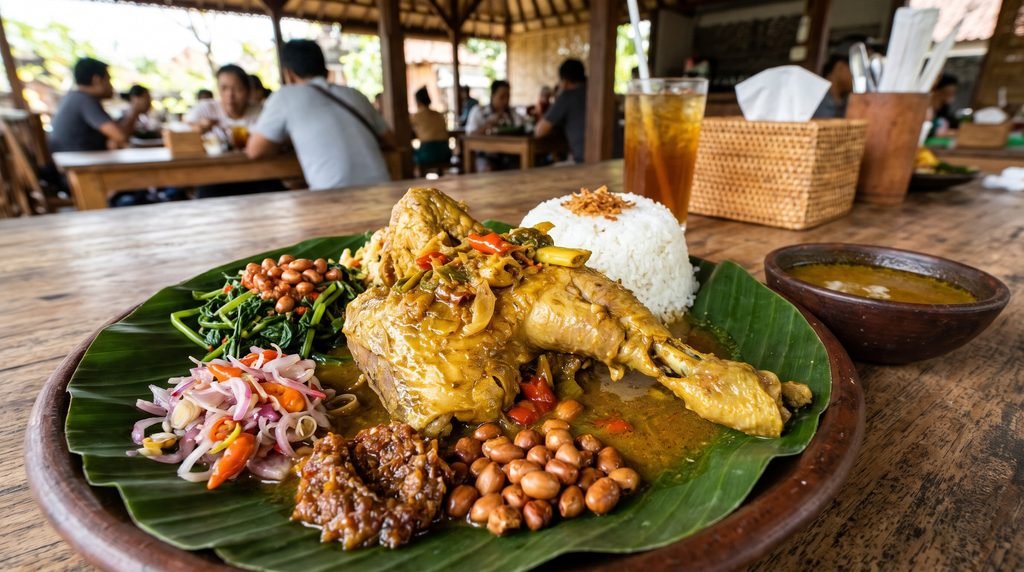
Ayam Betutu is a masterclass in patience. A whole free-range chicken (ayam kampung) is massaged inside and out with generous amounts of Basa Genep, wrapped tightly in banana leaves or betel nut husks, and slow-cooked for up to 12 hours until the meat falls effortlessly off the bone.
- Where Locals Actually Eat It: Ayam Betutu Men Tempeh in Gilimanuk (West Bali) is the legendary birthplace of this dish. If you are staying in South Bali, visit Ayam Betutu Khas Gilimanuk on Jalan Raya Tuban near the airport, or Warung Betutu Ibu Nia in Renon, Denpasar.
3. Lawar (Spiced Coconut & Vegetable Mix)
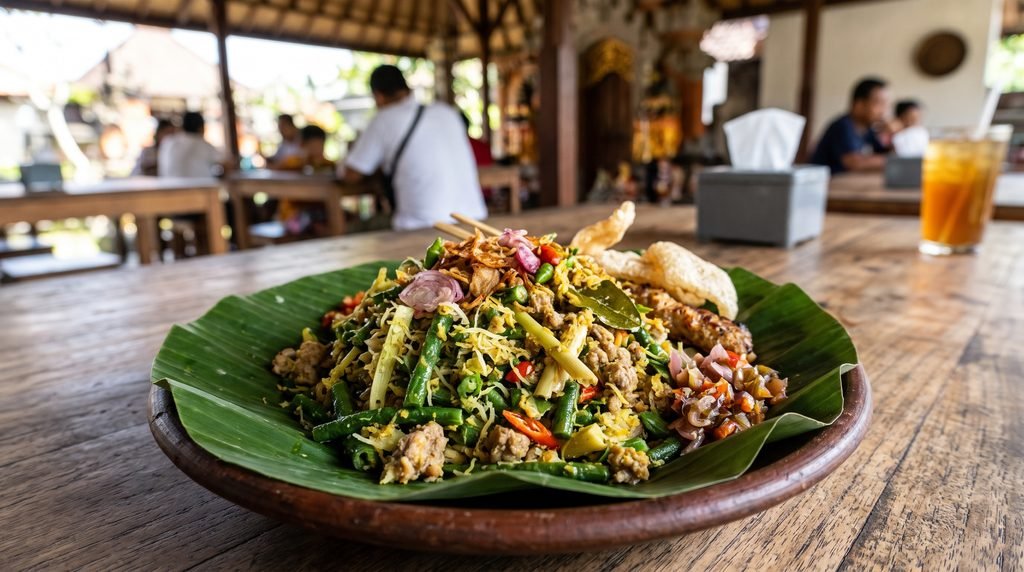
Lawar is an essential ceremonial dish made from finely chopped long beans, young jackfruit, grated coconut, and minced meat mixed with aromatic herbs and shrimp paste. There are two main varieties: Lawar Putih (white lawar, made without blood) and Lawar Merah (red lawar, traditionally mixed with fresh animal blood for richness).
- Where Locals Actually Eat It: Warung Lawar Kuwir Men Koko in Denpasar (famous for duck lawar) or Warung Odah in Gianyar.
4. Sate Lilit (Minced Lemongrass Satay)
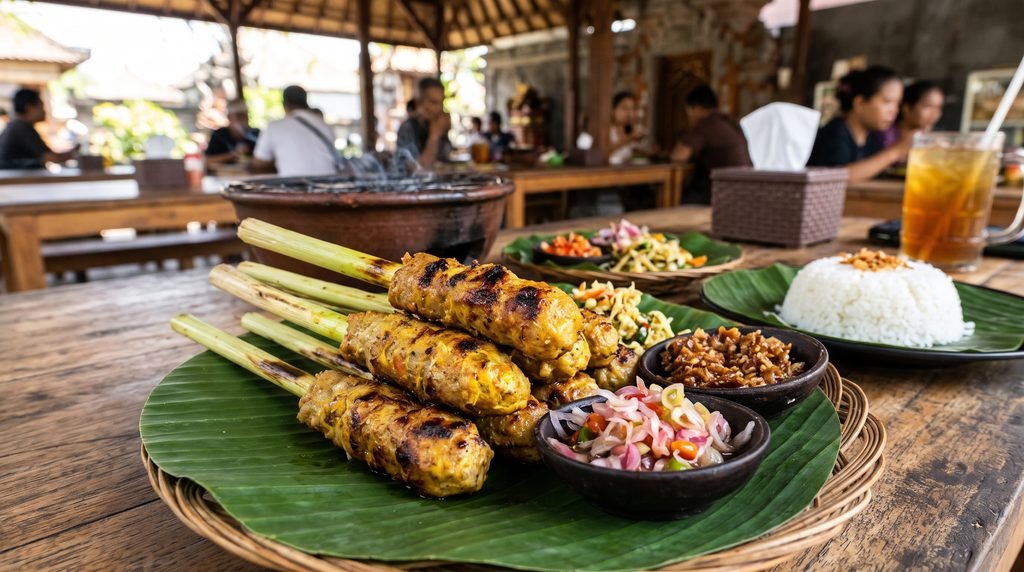
Unlike standard Indonesian satay, which uses cubed meat on thin bamboo skewers, Sate Lilit is made by pounding minced fish, chicken, or pork with grated coconut, coconut milk, lime leaves, and spices, then wrapping (lilit) the mixture around thick stalks of fresh lemongrass before grilling over coconut charcoal. As it cooks, the lemongrass infuses the meat from the inside out.
- Where Locals Actually Eat It: Warung Ari in Sanur or Warung Lesehan Merta Sari in Pesinggahan, Klungkung—a coastal village famous across Bali for its fish satay and pepes.
5. Nasi Campur Bali (Balinese Mixed Rice)
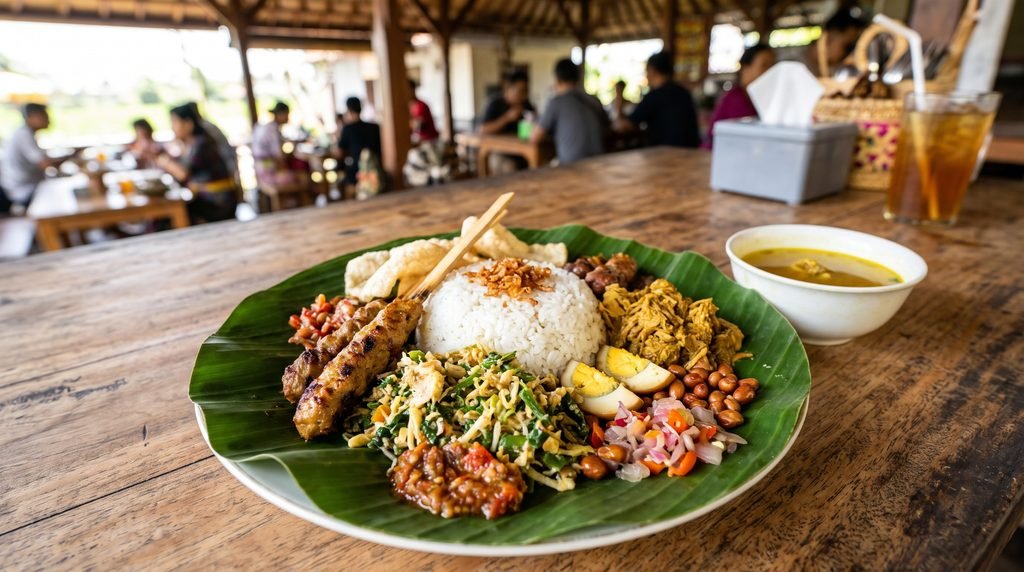
The ultimate everyday lunch for Balinese workers and drivers, Nasi Campur is a scoop of warm white rice surrounded by small, vibrant portions of island staples: shredded spiced chicken (ayam sisit), sate lilit, spicy green beans, crispy fried peanuts, boiled egg, and a spoonful of fiery sambal matah (raw shallot and lemongrass relish).
- Where Locals Actually Eat It: Warung Wardani in Denpasar (the original location on Jalan Yudistira) or Warung Mak Beng in Sanur (which specializes in fried fish, fish head soup, and legendary chili paste).
6. Bebek Goreng & Bebek Betutu (Crispy or Spiced Duck)
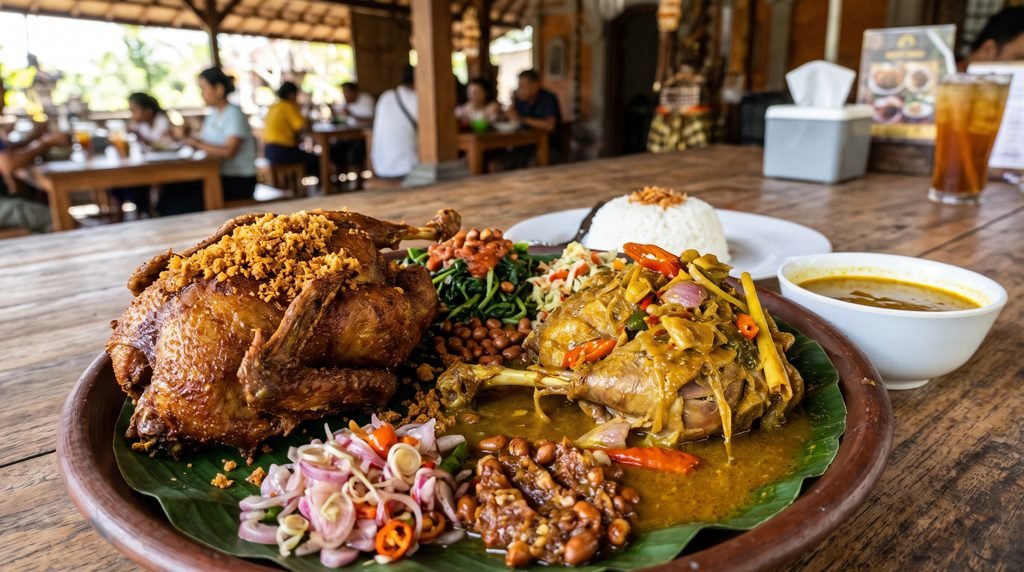
Duck farming is an iconic sight across Bali’s terraced rice fields, and Balinese cooks know how to prepare it better than anywhere else. Bebek Goreng is marinated in spices, steamed until tender, and flash-fried so the skin turns shatteringly crisp while the meat stays juicy.
- Where Locals Actually Eat It: While Ubud has many upscale duck restaurants, locals love Bebek Tepi Sawah (Goa Gajah, Ubud) for scenic dining or Bebek Bengil—and for pure local flavor without the resort markup, try Warung Bebek Timbungan in Denpasar.
7. Tipat Cantok (Balinese Rice Cakes with Peanut Sauce)
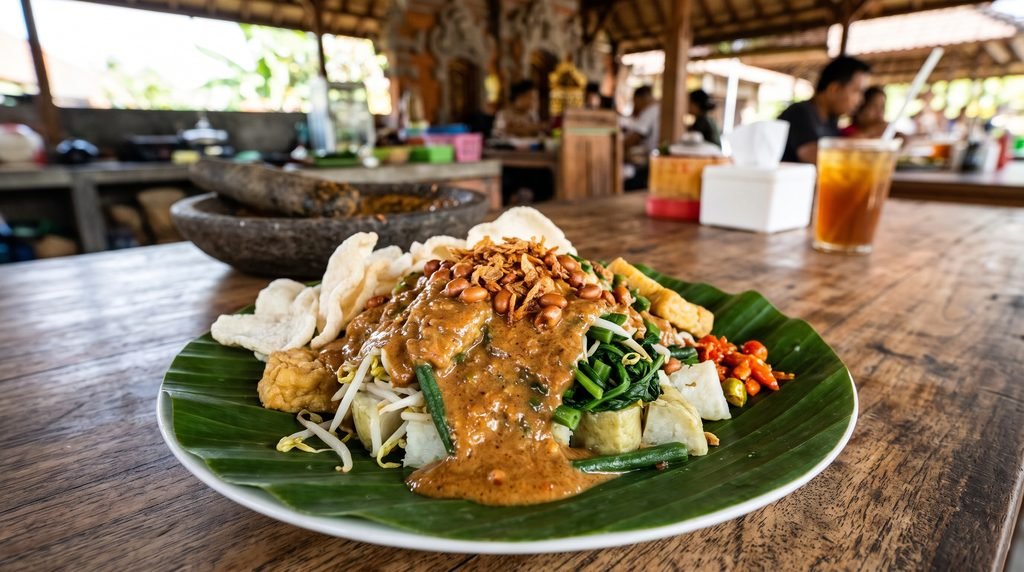
Often called Bali’s answer to Gado-Gado, Tipat Cantok is a refreshing, plant-based street food favorite. Sliced diamond-shaped rice cakes (tipat) are tossed with blanched water spinach, bean sprouts, long beans, and fried tofu, then coated in a freshly ground sauce made from roasted peanuts, garlic, bird’s-eye chili, palm sugar, and a squeeze of kaffir lime.
- Where Locals Actually Eat It: Tipat Cantok Bu Wati in Denpasar or small afternoon street stalls around Sanur Beach and Sindhu Market.
8. Serombotan (Klungkung Spiced Vegetable Salad)
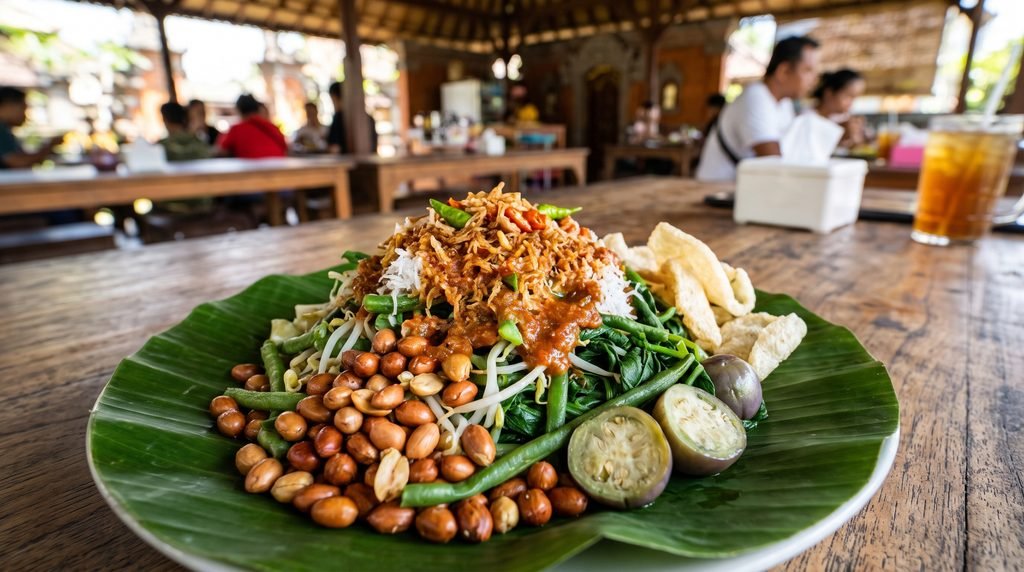
Originating from the eastern regency of Klungkung, Serombotan is a vibrant, crunchy vegetable dish consisting of water spinach, long beans, bean sprouts, round eggplant, and bitter melon. What sets it apart is kalas—a thick, spicy dressing made from roasted coconut milk, peanuts, turmeric, and aromatic ginger (kencur).
- Where Locals Actually Eat It: Serombotan Bu Made near Pasar Senggol Klungkung. Make it a lunch stop on your way to Besakih Temple or Sidemen Valley.
9. Ikan Bakar Jimbaran (Charcoal-Grilled Seafood)
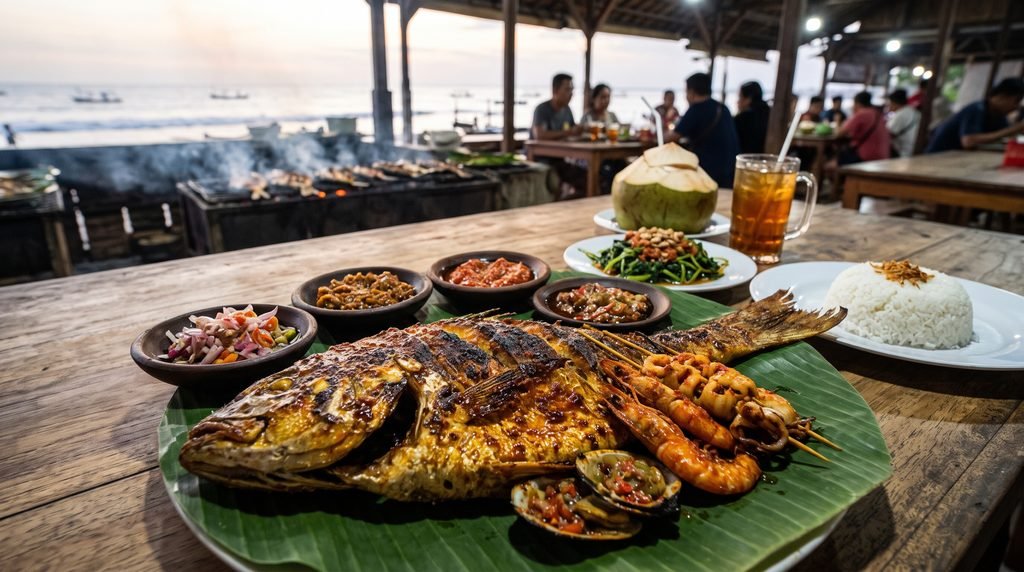
Eating grilled red snapper, squid, and jumbo prawns with your toes in the sand at sunset is a classic Bali ritual. The secret lies in the basting sauce: a sweet-and-savory glaze of garlic, shallots, chili, shrimp paste, and sweet soy sauce brushed onto fresh catch grilled over coconut husks.
- Where Locals Actually Eat It: Skip the overpriced tour-bus traps at the northern end of Jimbaran Bay and head south toward Kedonganan Fish Market. You can buy fresh fish straight from the fishermen’s boats in the morning or afternoon and have the neighboring beachside warungs grill it for a small fee per kilogram.
10. Bubur Mengguh (North Bali Spiced Rice Porridge)
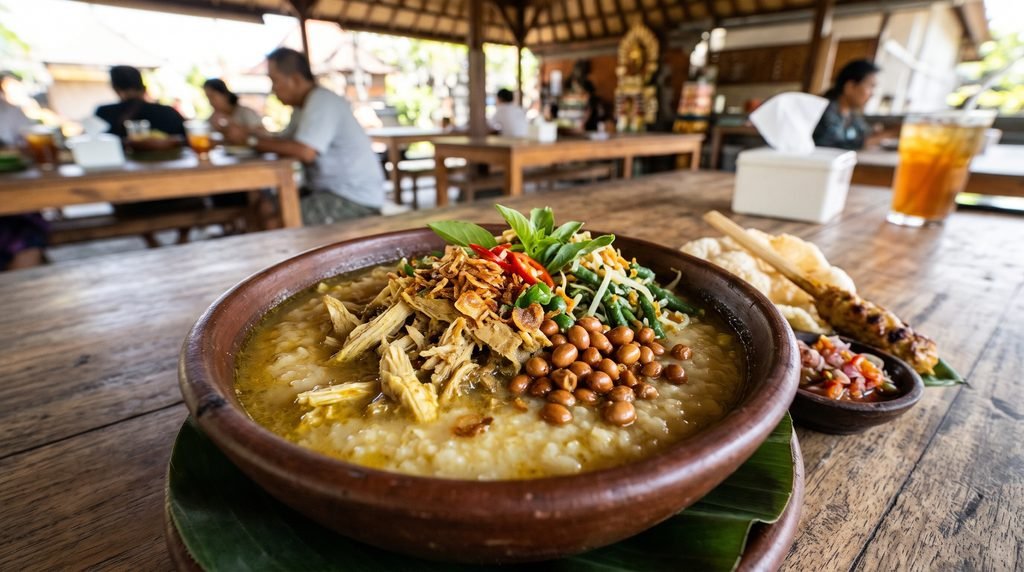
If you travel north toward Lovina or Munduk, look for Bubur Mengguh—a specialty from Buleleng Regency. Unlike plain Chinese congee, this thick rice porridge is cooked with coconut milk and traditional spices, topped with shredded spiced chicken, roasted peanuts, crispy shallots, celery, and a rich yellow chicken broth.
- Where Locals Actually Eat It: Warung Bubur Mengguh Ibu Nur in Singaraja (North Bali), usually served in the morning for breakfast.
11. Jaje Laklak (Traditional Balinese Pandan Pancakes)
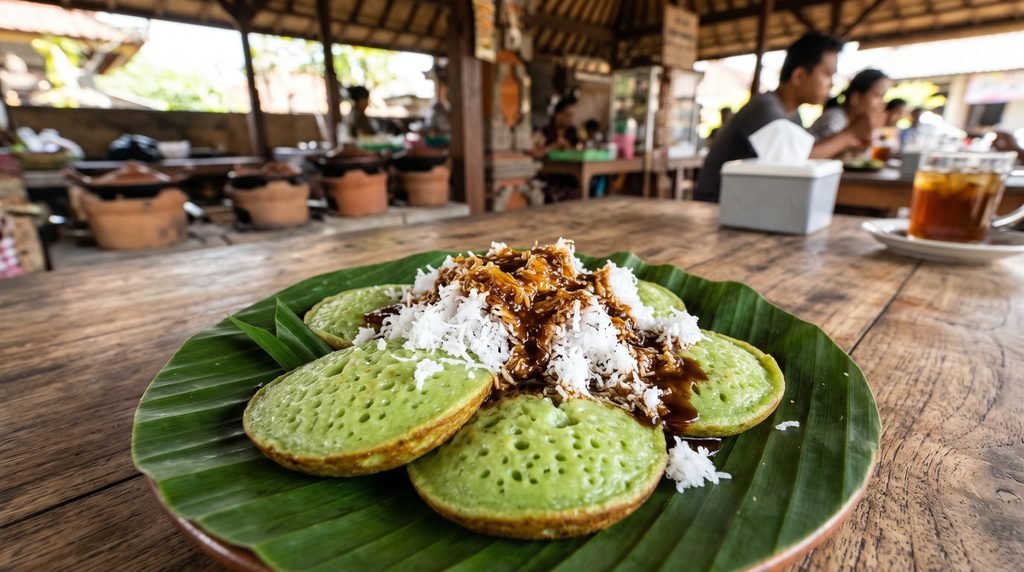
For dessert or morning coffee, locals reach for Jaje Laklak—small, fluffy green pancakes made from rice flour colored naturally with suji and pandan leaves, baked in traditional clay molds over a wood fire. They are topped with freshly grated coconut and drizzled with melted dark palm sugar (gula bali).
- Where Locals Actually Eat It: Pasar Sindhu Night Market in Sanur or Pasar Badung in Denpasar early in the morning.
12. Es Daluman (Wild Balinese Grass Jelly Drink)
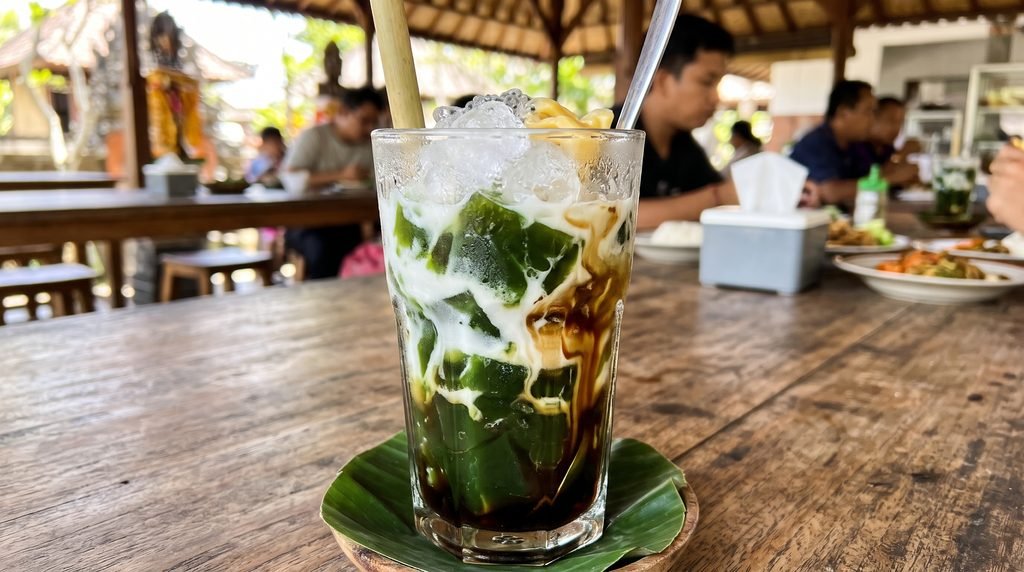
Bali’s tropical humidity calls for something cold, and Es Daluman is the ultimate local refresher. Unlike commercial black grass jelly, daluman is made by hand-crushing fresh green cincau leaves in water until they naturally set into a bright emerald jelly. It is served over shaved ice with creamy coconut milk and thick palm sugar syrup.
- Where Locals Actually Eat It: Sold from traditional carts across Denpasar and Gianyar—look for stalls near Lapangan Puputan Renon in the late afternoon.